What’s Next for Hannah True?

Hannah and the Civil War

Reputation, the fourth book in The Adventures of Hannah True, is set in January 1861, so as much as we would both like to, neither Hannah nor I can escape the Civil War. My problem with writing about the Civil War is how big it is in time and battles and geography. With all the possibilities, where will I find Hannah’s story?

Finding a Time

Research revealed that fraud was rampant in the Civil War, so much so that the False Claims Act of 1863 was signed into law by Abraham Lincoln on March 2, 1863. Corrupt contractors delivered shoddy merchandise in the form of uniforms and shoes that fell apart in rainy weather, sick horses and mules, grains infested with weevils, broken rifles, and more. The act provided rewards for information that led to bringing the fraudsters to justice. Upon the passing of the law, Vance Hollandar and his agency at once began investigating. Hannah, with two years of experience as a detective, is part of the team.

The novel will begin on July 10, 1863 at Aunt Gertrude’s house in New York City. Possible family members who will be part of the story are Cordelia, who is driving a photography wagon and taking battlefield photographs for Mathew Brady and Darcy Haynes, and Lucy, who has dressed as a man and joined Jake, the man she loves, on the front lines.

Finding a Place

Research is still needed to determine the place of the investigation. I am hoping for a Kansas/Missouri connection to bring the story closer to other members of the Pierce family.

Research

I found the following resource published in 1864. I couldn’t make a screenshot work, but the link will work. If you are interested, Click here

NURSE AND SPY

IN THE

UNION ARMY:

COMPRISING

The Adventures and Experiences of a Woman
in Hospitals, Camps, and Battle-Fields.

By S. EMMA E. EDMONDS.

WITH ILLUSTRATIONS.

Published by Subscription only by
W. S. WILLIAMS & CO., HARTFORD, CONN.
JONES BROS. & CO., PHILADELPHIA AND CINCINNATI.
J. A. STODDARD & CO., CHICAGO, ILL.
1865.

Entered
According to Act of Congress in the year 1864,
By W. S. Williams & Company
In the Clerk’s Office of the District Court of the United States,
For the District of Connecticut.
Back from Vacation

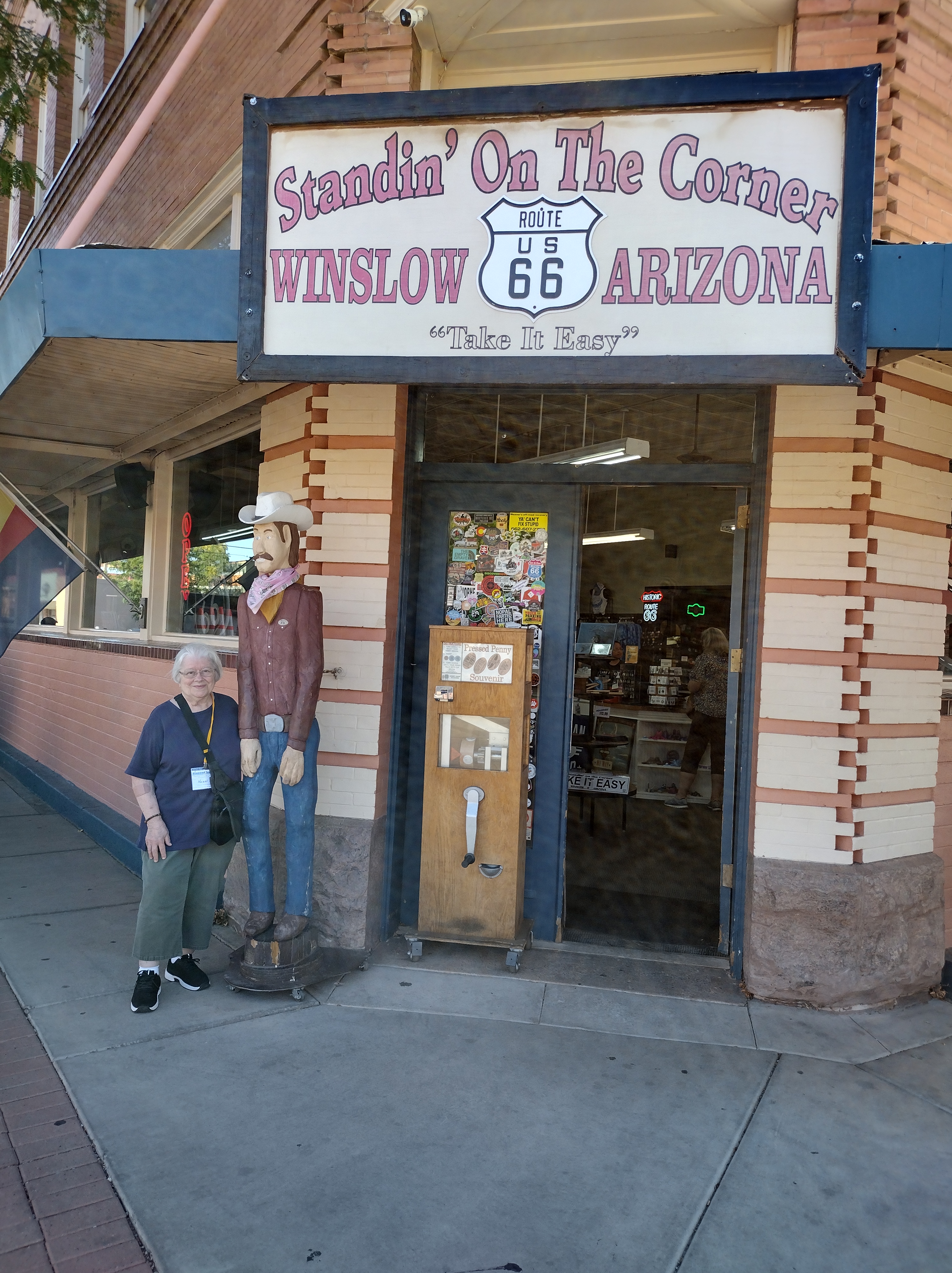
I’m in Winslow, Arizona, standing beside a long, tall cowboy with a wooden heart.

My ten-day Emporia Rec tour included the following overnight stops:

  • Hays, Kansas
  • Parachute, Colorado
  • Flamingo in Las Vegas, Nevada (three nights)
  • Flagstaff, Arizona
  • Santa Rosa, New Mexico
  • Oklahoma City, Oklahoma
  • Emporia, Kansas: Home at last

Tour guides provided for the following locations:

  • Las Vegas, Hoover Dam, Lake Mead, Boulder City
  • Grand Canyon National Park

Museums:

  • Smoky Hill Museum, Salina, Kansas
  • Denver Museum of Nature and Science, Denver, Colorado
  • Mojave Museum of History and Arts and Route 66 Museum, Kingman, Arizona
  • Rainbow Forest Museum, Petrified Forest National Park, Holbrook, Arizona
  • Kwahadi Museum of the American Indian, Amarillo, Texas
  • Oklahoma City National Memorial, Oklahoma City, Oklahoma

What I learned on a ten-day bus tour:

  • Ten days on a bus is about three too many
  • Our route required us to reset our watches four times
  • Hotel beds are too high for short people

The best of all:

Travel is a treasure trove of ideas for future stories, poems, and novels.

Come back to see how those develop.

Researching St. Louis: Following the Book Trail

In my last post, I wrote about visiting St. Louis and the museums at the Arch and Forest Park to learn more about its history for my upcoming novel, the fourth book in the Adventures of Hannah True series. I learned enough to realize I needed a new name for the novel: That buildings with false fronts were not really a thing in 1861 St. Louis. Also, while there, I purchased a book of essays, Historic Tales of St. Louis, which was the first step on a journey to the city’s past.

Mining Bibliographies

Many of the articles in Historic Tales of St. Louis were relevant to the 1861 time period, others were not. I skimmed article titles, such as “Army Secretly Sprays St. Louis in Chemical Weapons Program,” “Cary Grant Starts a Trend: Chocolates on a Hotel Pillow,” and “Gaslight Square: See Barbara Streisand for Two Bucks,” and focused on the articles dealing with the 1840s through the 1860s. These included “Brewers and Their Caves,” “Cholera Outbreak of 1849 Kills 10 Percent of Population,” “From Horses to Streetcars,” and “The Great Fire of 1849.” The bibliography in this book led me to an interesting online article, “St. Louis Beer History: Underground Beginnings.” You might have guessed from two of the titles that my novel has scenes in caves where beer is brewed. Until I read these articles, I had no knowledge of underground beer brewing.

An online search led me to another excellent source, A Most Unsettled State: First-Person Accounts of St. Louis During the Civil War. I ordered the book through Emporia’s bookstore, Middle Ground Books, and the excerpts from diaries and letters in the first two sections put me emotionally in the city at the time of my novel. Instead of a bibliography at the back of the book, the source information is given at the end of each excerpt. I was captivated by Galusha Anderson’s description of St. Louis as a city built with red brick, which included homes, businesses, warehouses, and even sidewalks. Wanting to learn more, I searched for his book written in 1908 and found it online: The Story of a Border City During the Civil War.

Another source that helped me understand the tensions between neighbors was Julius Rombauer’s The Union Cause in St. Louis in 1861: An Historical Sketch. Both Galusha Anderson and Julius Rombauer lived in St. Louis during the time of Hannah True’s next adventure, and their books are adding to my knowledge of the people and their world.

Now that I have such excellent historical sources, I am using them to set the scene for Hannah’s first case, a murder mystery set in January 1861 in St. Louis. My goal is to finish the novel and publish by August 2025.

Researching St. Louis

St. Louis has been a stopover on the journeys of many members of the Pierce family and of Hannah True. They caught steamboats going west or trains going east, but St. Louis was never their destination, the place where the story happened, until Book 4 of Hannah’s adventures.

In Book 4, now a rough draft in progress, Hannah joins the Hollandar Detective Agency and goes on her first official case. She is joined by agency owners, Vance Hollandar and his mother Victoria Nelson. Additional new investigators are Benita Walton and Aaron Jackson. The owner of an upscale St. Louis hotel has hired Vance to investigate a series of thefts that have been carried out over several weeks. Because Vance and his team arrive undercover, and because I had read and seen so many buildings with so-called false fronts in old western towns, I decided a perfect name for the novel would be False Fronts. I even envisioned a book cover with that image.

One Big Problem

Buildings with false fronts were a few hundred miles west and half a dozen or more years later than the St. Louis setting of my story. So now I am working on a new title and cover and researching to find out what more I need to know before I make a decision. A recent Emporia Rec Center tour allowed me to visit the city and its museums. The trip gave me a start toward building the crime scenes and the backstory of the characters involved in committing those crimes while also searching for a fitting title.

1849 Was a Bad Year for St. Louis

In 1849, the population of St. Louis was about 63,000. On May 17, fire destroyed the waterfront business district. In the summer of 1849, a cholera outbreak killed approximately 4,500 St. Louis residents. Main characters in my novel lost family members in these two events, and those losses shaped their lives.

Within a year of the fire, new buildings made of brick, some five stories high, were built to replace what was destroyed. By January 1861, the year my novel takes place, St. Louis had a population of nearly 161,000. Brick buildings, not the false fronts of frontier towns that I had imagined, lined the streets.

What’s Next?

As I explore the setting for my now unnamed novel, I’ll be researching the caves beneath St. Louis and the nefarious things that might happen in them. Maybe I’ll find a title buried there.

Receipt? Don’t You Mean Recipe?

When I was a child, every time my grandma talked about her favorite receipt for fry bread, I wondered why she mispronounced the word. It was recipe. Didn’t everyone know that? Well, my mother didn’t. They were receipts to her, too. You can guess where she got that. Imagine my surprise when I learned that historically, receipt is just as correct as recipe.

In Hiram’s Girls, Ella and Jennie go in search of their mother’s cookbooks. They find Miss Beecher’s domestic receipt book by Catherine Beecher, as well as Seventy-five receipts of pastry, cakes, and sweetmeats by Eliza Leslie, and The American economical housekeeper, and family receipt book by E. A. Howland.

So Grandma and Mom were right. For a little more on the history of receipt vs. recipe, check this dictionary entry and this article on the history of the two words.

Saga update: I’m working hard on Hiram’s Girls, trying to get all the details worked out. I have an ending. It’s what leads up to it that is still in limbo.

The Right Word: Suffragist/Suffragette

“It’s what you learn after you know it all that counts.”

John Wooden

What I’ve always heard

As a woman who has always been interested in the women’s rights movement, I thought I knew the right word for the women who fought for the right to vote in the United States: suffragette. It was repeated in everything I read and heard over the years. Then I read Sarah Canary by Karen Joy Fowler and came upon the word suffragist for the first time. Because the word was new to me, I had to learn more.

What was true

A quick search on the term revealed Fowler was right. On learning that suffragette as a word did not exist until the early 1900s, I was embarrassed that I had used it in reference to Hannah True, the aunt of the Pierce siblings, in all the novels set in 1855 and forward. If you’d like to know more about the origin of suffragette and how it differs from suffragist, go to this article on the National Park Service site.

My point

When you write historical fiction, or any fiction that contains facts, you run the risk of being wrong, and often it is what you thought you knew that turns out not to be true. However, if you spend time investigating the origin and meaning of every word and detail of every event you want to include in your story, you’ll never get the story written. Research what you know you don’t know, and when you see something at odds with what you believe to be true, look it up. In the meantime, keep writing. The world needs more stories that touch our hearts and minds and challenge our beliefs. And if you do use an incorrect word, sooner or later, someone will let you know.

My Research Graphic

HISTORICAL RESEARCH3roundpic

First a “Thank You”

Thank you to writing buddy and Photoshop whiz  Bonnie Eaton, aka B.J. Myrick, for creating my historical research graphic. I supplied the list of resources, and she put them together with a picture of me hard at work. Bonnie knows what is involved in research as she has her own historical novel, Nelly of No Man’s Land.

The Library Book Collection: My First Research Stop

Once I settled on the Battle of Mine Creek, my first stop was the Emporia Public Library to see what it had on the topic. Out of a half dozen books that looked promising, I found They Deserved a Better Fate by Roy Bird to be particularly helpful as it sparked the idea for the main character and part of the plot. Learning that the Confederates had taken prisoners at the Battle of the Blue near Westport and marched south with Price’s wagon train past Mine Creek all the way to Newtonia before being set free, I knew that Hiram Pierce would be my main character and that he would be one of those prisoners. In previous Pierce saga novels, we’ve seen Hiram’s dark side. Will being a prisoner of war change him? If so, how? All of that is still to be determined as I delve into Hiram’s character, his motives for voluntarily joining the militia, and the conditions of his capture and time as a prisoner.


Researching Hiram’s War


Mine Creek 1
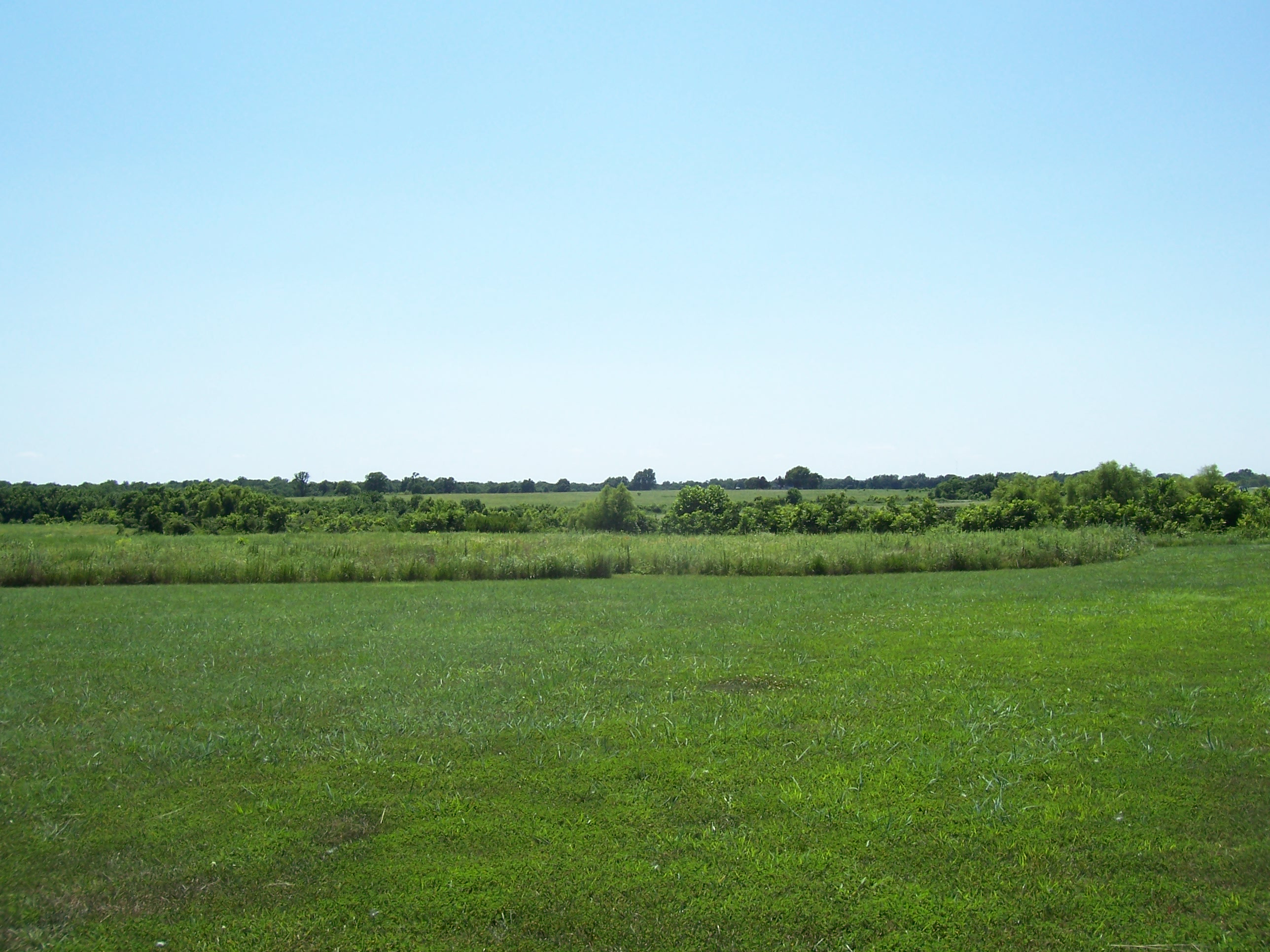
Photo of the location of the Civil War Battle of Mine Creek in Kansas taken July 7, 2018

The Civil War: Too Big for Me

I knew as I was writing the final pages of Hiram’s Boy, that the next story in the Pierce Family Saga would have to include the Civil War. The thought was intimidating. How many battles should my characters be part of? How would I ever do all the research? Then, sometime in January 2018, I started thinking about Civil War battles fought in Kansas. A bit of research led me to the Battle of Mine Creek, which took place on October 25, 1864.

The Research Trip

When I mentioned my brilliant idea to a group of writer friends, Cheryl Unruh said, “Road trip!” I immediately said, “Yes!” We had thought to visit the Mine Creek Museum in April, but time passed without a definite date. Then on Saturday, July 7, I got a text from Cheryl saying the day was the coolest we would probably get for a while, so let’s go. And we did.

The Museum

The museum is in a rural area off Highway K-52 near Pleasanton, Kansas. Upon signing in, we were greeted by a member of the museum staff. I explained my interest in the battle and was handed a fabulous brochure, which I will say more about later. Then we wandered through the indoor exhibits, which included fashions, bullets, and a cannon replica, as well as large information posters about the battle sequence and soldiers involved. Then Chery and I went outside to view the battlefield. By that time, it was mid-afternoon and too warm for me to make the hike through the field and read the signs, but as you can see from the picture at the top of this post, it was a beautiful Kansas day.

The Brochure

I didn’t look at the brochure I was given until that evening when I got home. My first reaction when I opened it was “Wow!” I still keep saying “Wow!” every time I look at it. This has got to be the absolute best, most informative brochure ever. The entire Price Campaign of 1864 is shown, along with the battles and dates from September through November. Below that map is a brief description of what happened at each point in the campaign. On the reverse side of the brochure is a detailed accounting of the actual Battle of Mine Creek. there are two large maps and two small ones, each showing different views, along with a summary of the action on the day of the battle. This one brochure gives me a wonderful timeline for presenting the action in the novel.

What’s Next?

Given what I’ve learned about the Battle of Mine Creek and what happened in the days before it was fought, I’ve found a title for Book 4 of the Pierce Family Saga: Hiram’s War. I’ll be writing more about that in the next post.

In the meantime, if you are interested in learning more about this little-publicized battle on Kansas soil, check out their museum page. The research links are going to be high-priority for me as I gather more information for Hiram’s War.


Defining Panic

FWF5cover blog

In last week’s post, I lamented the lack of closets in nineteenth century houses, but fixing that error in my novel was easy compared to the other problem my astute critique partner, Wes, brought up. First, the offending sentence from thirteen-year-old Lucy’s point of view:

In his letters, Ambrose had said even with the depression the last couple of years, the town and Pa’s blacksmith shop had done well.

The problem?

In the nineteenth century, economic downturns weren’t depressions, they were panics. Yes, Lucy was referring to the Panic of 1857. It was easy enough to remove depression and insert panic, but I couldn’t help wondering how a modern reader would interpret panic. I felt a definition was necessary, but definitions tend to slow down the action and take readers out of the story. Below is my attempt to explain without author intrusion. Does it work?

In his letters, Ambrose had said even with the Panic the last couple of years, the town and Pa’s blacksmith shop had done well. All I knew about the Panic was what I heard folks at the hotel say: In 1857, a ship on the way from the San Francisco Mint to the States in the east had sunk with thirty thousands pounds of gold on board. I couldn’t even imagine what that much gold looked like. Aunt Hannah said banks were shutting down, railroads were going broke, and farmers were getting less money for grain and not paying their mortgages. With fewer people going west, fewer people were staying at our hotel. For most of the last year, Aunt Hannah said the hotel barely made enough to stay open, and my pa and uncles complained they weren’t seeing the profits they once did. Those hard times seem to have gone by without touching Hidden Springs.

Just writing it out here, I’m thinking I’ve overdone the explanation. I question whether I needed all the facts I gave about the Panic. Should I take out the part about the sinking ship and go straight to what Aunt Hannah said? Is the definition of a panic clear? Is it credible that Lucy has this information at the age of thirteen? These are all questions I will continue to mull as I finish the second revision and move on to the third. Any advise will be appreciated.


No Closets?

One of the pluses of a critique group is that each person comes with a different set of knowledge about the world. This month, I e-mailed eighteen pages of For Want of a Father to my critique partners. One of them, Wes, commented on my use of an anachronism: closets and hangers in a mid-nineteenth century house.

Of Closets and Coat Hangers

Wes’s comments got me thinking back to the farmhouse I lived in as a child. There were no closets. My mother had a free-standing wardrobe in her room, and there were hangers, but I am talking the 1950s. My novel takes places one hundred years earlier in the 1850s. I clicked on Google and did a search, hoping for exact dates when houses had closets.

I didn’t get exact dates for either the closet or the coat hanger, but rich people did have closets. In fact, Thomas Jefferson, Founding Father and third President of the United States, invented the wooden coat hanger so he could hang his coat in his closet. However, while my characters are well off compared to their neighbors, they are not rich and probably had neither closets nor hangers.  I have made the necessary corrections.